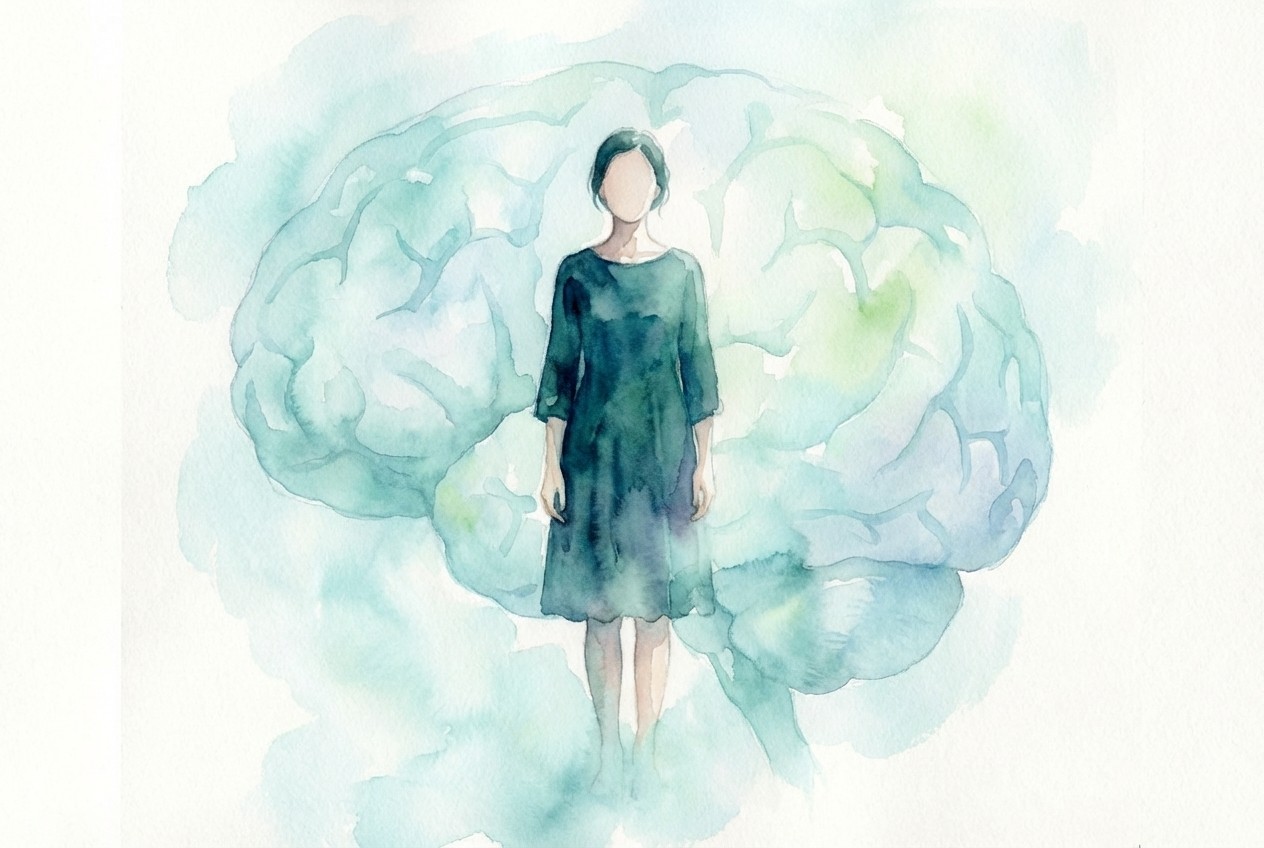

Brain Fog. They Missed the Traumatic Brain Injury.
My husband needed three things from the grocery store: limes, cilantro, and a jalapeño. He was making tacos and rattled them off as I grabbed my keys.
I came home with two.
He looked at me, confused. Where was the third item? I didn’t know. Three items. One quick trip. I couldn’t even tell you which one I’d forgotten.
It wasn’t an unusual day.
What It Felt Like
Mine sat behind my eyes and stayed. I would lose words mid-sentence and have to stop and ask what I was saying. I’d read the same paragraph over and over and still not be able to tell you what it said. I’d open my laptop to do something and by the time it loaded, the reason was gone.
The simplest tasks became unreliable. I’d start loading the washing machine, remember there was something upstairs I needed to add to the load, and walk up to get it. By the time I reached the top of the stairs I had completely forgotten why I was there. So I’d do something else instead, like make the bed or straighten up the room, and then head back downstairs.
That’s when I’d see the washing machine door still open, the half-finished pile of laundry sitting there waiting for me to come back and start the cycle.
Oops.
I had spent twenty years in compliance and audit work. My career depended on precision, on holding complex frameworks in my head while tracking dozens of moving parts. Now she was disappearing in front of me, one lost word and one forgotten errand at a time.
What They Called It
The same explanations I’d been hearing for years: stress, anxiety, maybe the cognitive effects of chronic pain. One doctor even referred me to a pain psychologist and pain psychiatrist.
No one asked whether the fog had a measurable cause. It came along with everything else. No one investigated it on its own.
Did anyone ever think to look for yours?
When Someone Finally Asked
That changed when I started working with a functional medicine doctor in Florida. She asked about every fall, every accident, all the way back to childhood.
She referred me to a neurotherapist. He asked the same kinds of questions, this time focusing on every impact to my head and neck.
I started listing them. A pool somersault gone wrong at the YMCA. Monkey bars. A ski crash. Cobblestones in Boston. When I listed them, there were more than I expected.
Then he tested my brain.
What the Scan Showed
The test was a QEEG, a quantitative EEG that maps brain electrical activity across nineteen points on the skull. It measures how different regions of the brain communicate and compares those patterns to a normative database.
My report showed frontal and temporal dysregulation, reduced functional connectivity between brain regions, and a positive Traumatic Brain Injury Discriminant Analysis at the 90% probability level. Moderate severity.
In plain terms, the parts of my brain responsible for memory, language, and executive function were not communicating normally.
After years of the same explanations, I was looking at something measurable. Traumatic brain injury. Moderate severity.
The small failures that had been accumulating started to line up: the words that vanished mid-sentence, the paragraph I couldn’t comprehend at work, the three-item grocery list forgotten. Even the moments I had blamed myself for, snapping at my daughters over nothing, the irritability that didn’t match the situation, reactions that were too big for the moment and too fast to stop.
The Question Nobody Raised
No one had looked. After years of appointments and dozens of providers where I told every one of them that my thinking had changed and that my memory wasn’t working, not one provider ordered a brain scan or asked about head trauma. No provider asked about repeated hits to the head and neck.
The QEEG was available. No one ordered it.
It happens. More than it should.
Most of the doctors I saw had fifteen minutes and a referral pad. No one owned the full arc of what was happening to me. And once the explanation is in the chart, no one looks for another one.
What Came After
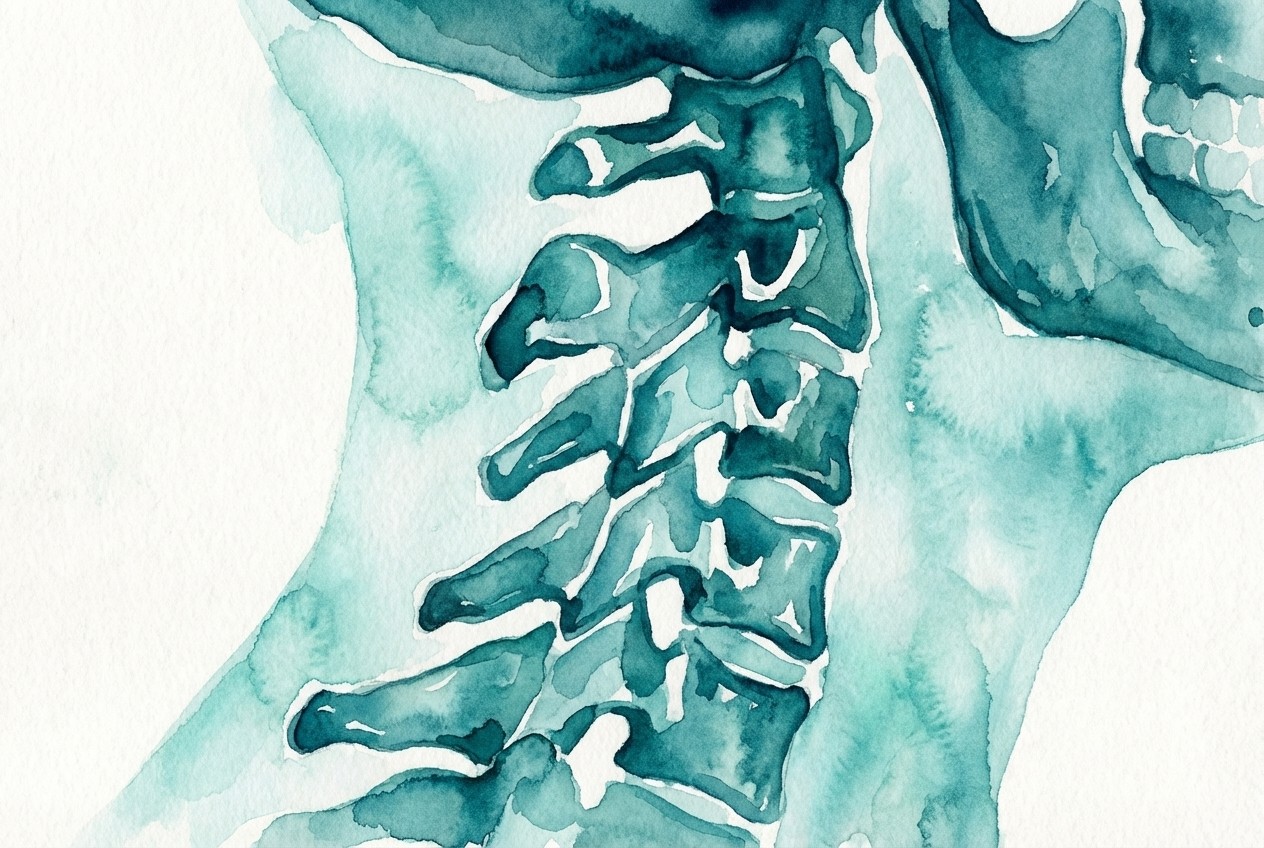
The TBI diagnosis was one piece. In the weeks that followed, dynamic imaging caught the slippage between C1 and C2. An upright MRI showed Chiari malformation and confirmed craniocervical instability (CCI).
I eventually had an occipital to C3 fusion with Chiari decompression. Nine months out, and I’m not fully back.
Not long ago, I ordered gluten-free Cheez-Its online for my daughter. Two boxes. When my husband saw the charge, forty-two dollars, he looked at me the way he had that night in the kitchen.
“Old Monica wouldn’t have made that decision,” he said.
He’s right. She wouldn’t have.
What I'd Tell You
Mine showed up on a scan.
The brain I have now is better. The woman who could hold a hundred details in her head while running global workstreams hasn’t fully come back. I’m learning to work with what I have.
Mine eventually had a name. It showed up on a scan after years of being told it wouldn't. If yours has been explained away for years, that explanation isn't the only one available.
Want to understand the structural cause?
Craniocervical Instability (CCI): A Patient’s Perspective.
Every stripe tells part of the story.
The full story begins in You Might Be a Zebra: Rare Unveiled.
Please note: This information is provided for general reference only and is not based on medical advice, diagnosis, or treatment. Always consult a qualified healthcare professional for medical concerns.