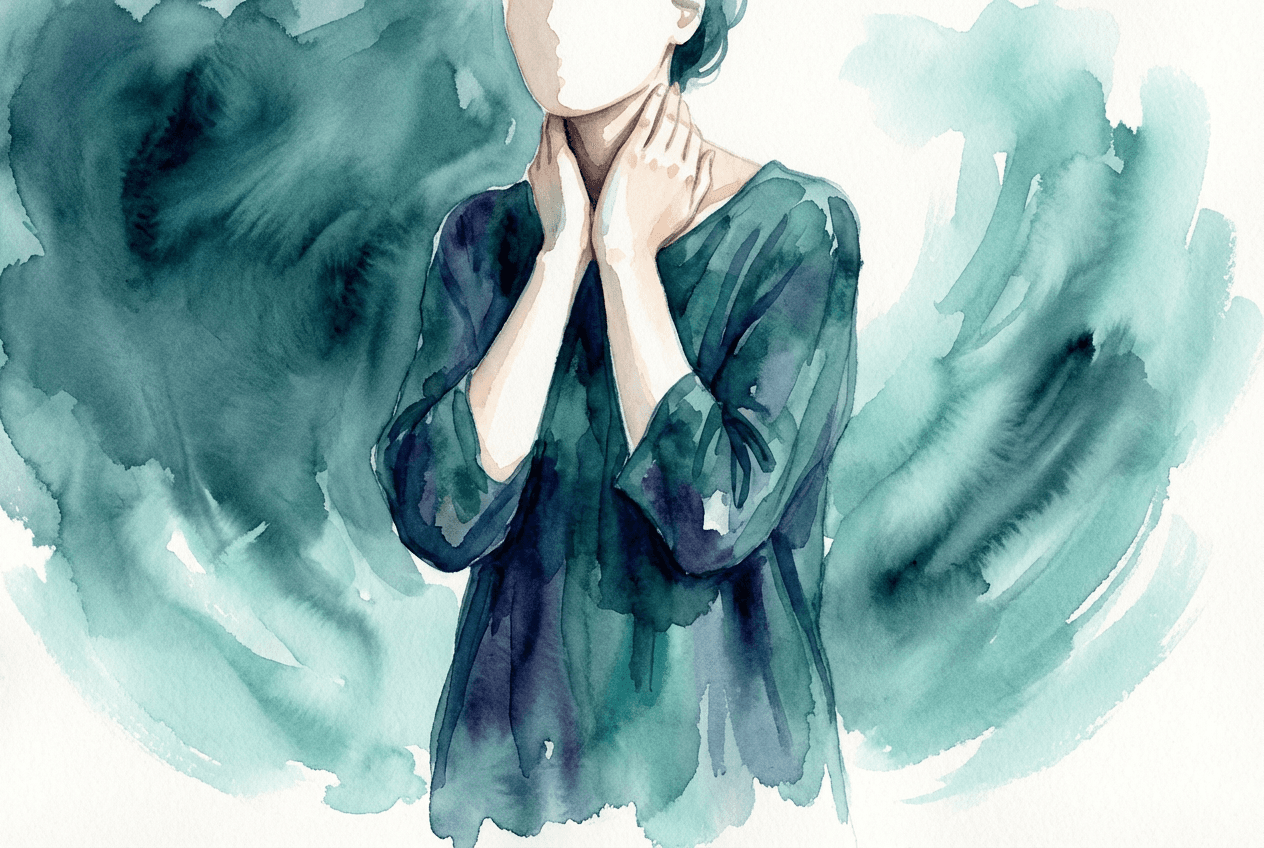

It Wasn't Tech Neck
It was always there.
It was a constant ache at the base of my skull. The muscles running up the back of my neck were tight, always pulling against the weight of my head. By the end of the day, I couldn't hold my head up. My head felt too heavy for my neck.
All I wanted was my commercial grade heating pad. On high, all the time.
I told every doctor I saw. They all had answers.
If you've been told the same thing, you're not imagining it.
What They Called It
Tech neck was the first label. I was working from home. They said it was posture. They said I was sitting wrong and looking at screens too long. Told me I was holding tension in my shoulders. I adjusted my workstation. I stretched. The pain didn't change. Neither did the pressure at the base of my skull.
Then it was stress. Then perimenopause. Every provider said the same things: manage your stress, adjust your posture, try anti-inflammatory foods, reduce your screen time. My chart said neck pain and migraines. The conversation always came back to lifestyle.
What I Tried
For three years I tried everything they suggested. A dentist connected it to tooth sensitivity. Bite guards were first. Then Botox injections for the jaw. Then trigger point injections. Acupuncture. Physical therapy. Muscle relaxants. Prescription NSAIDs. A curved metal tool a specialist hooked around the base of my neck and pulled hard enough to make me flinch.
No one asked why it never left. No one asked why holding my head up took so much effort.
What The Evenings Looked Like
We'd barely finished the dishes when the girls were already asking for the popcorn.
I used the air popper. The kernels shot out of the spout into a mixing bowl. I'd melt the butter, pour it over, add the salt, and stir it together before filling the red movie theater containers. One for each of us. Except my husband. He volunteered to take the mixing bowl with whatever was left in it, while the girls whined how unfair that was from the other room.
I had the neck wrap on before any of it started. Pajamas first, then the wrap. Getting through dinner and cleanup was all I had left in me. The heating pad was already waiting for me on the couch. By then, getting through the evening had become its own kind of work.
We were working our way through Once Upon a Time, years after it had aired. The girls would press into me under the fluffy blanket and catch the smell of the wrap.
"Not the meat pie," they'd say.
I laughed. I always laughed.
But sometimes, somewhere in the middle of an episode, I would drift. Back into the exam rooms, back into the explanations that didn't hold.
What if they're right. What if it is all in my head. That's what repeated dismissal can do. It makes you question what you know about your own body.
Then Rumplestiltskin would say something: All magic comes with a price, dearie. Or one of the girls would laugh, and I'd come back.
The episode kept playing. They thought I was watching.
On the nights when I didn't have the energy to make the real popcorn, I'd call from the couch and tell them to just make a bag in the microwave. They did and nobody said anything about it.
When I Stopped Believing the Explanations
My body kept getting worse. It built slowly. Appointment by appointment.
I was referred to both a pain psychologist and a pain psychiatrist. Two separate referrals, for the pain at the base of my skull. Before anyone had ruled out something structural.
I had been in enough boardrooms to know when a problem was being managed instead of solved. Something structural was wrong. No one was looking at the full picture.
What It Actually Was
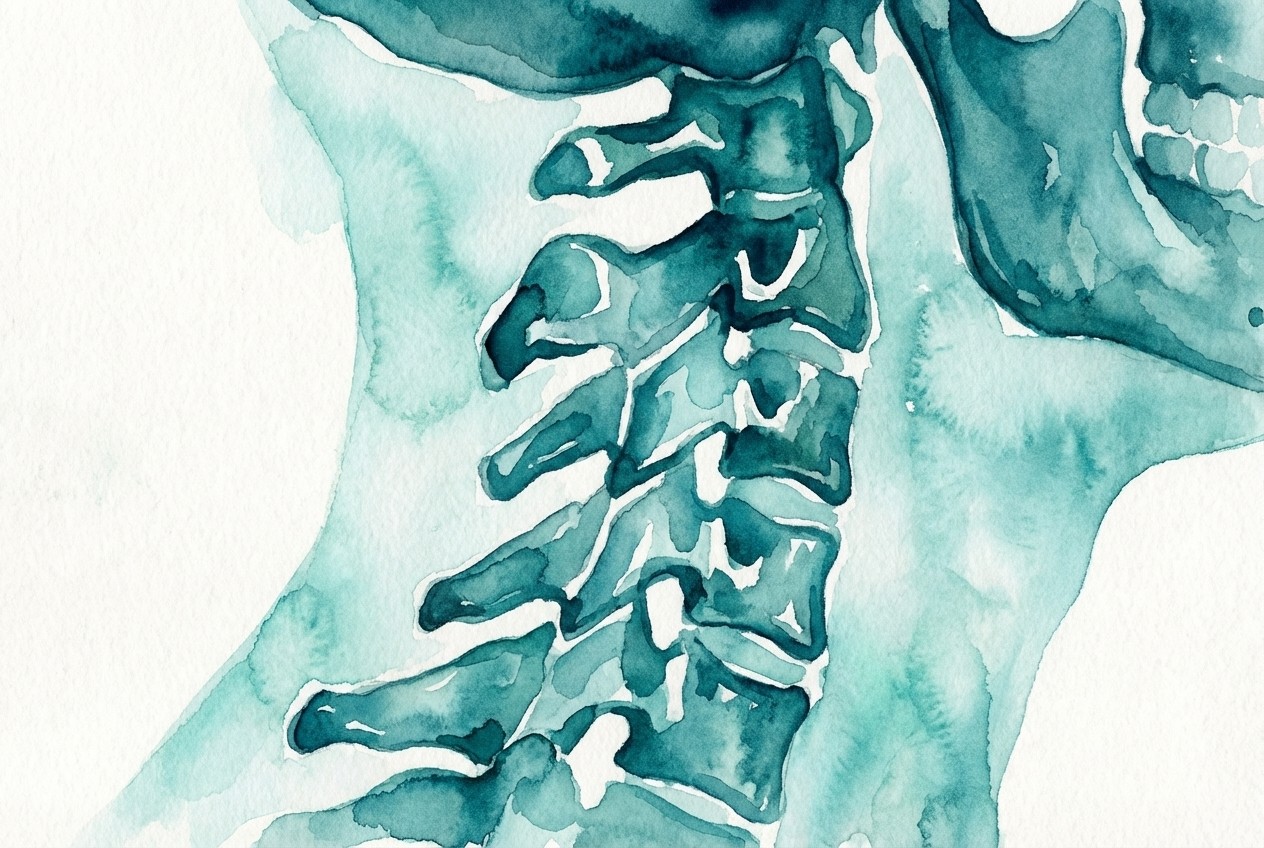
In my case, it was craniocervical instability (CCI). The ligaments connecting my skull to my upper spine were too loose to hold the joint in place. My muscles were compensating for a structural failure they were never built to manage. What they called tech neck was craniocervical instability.
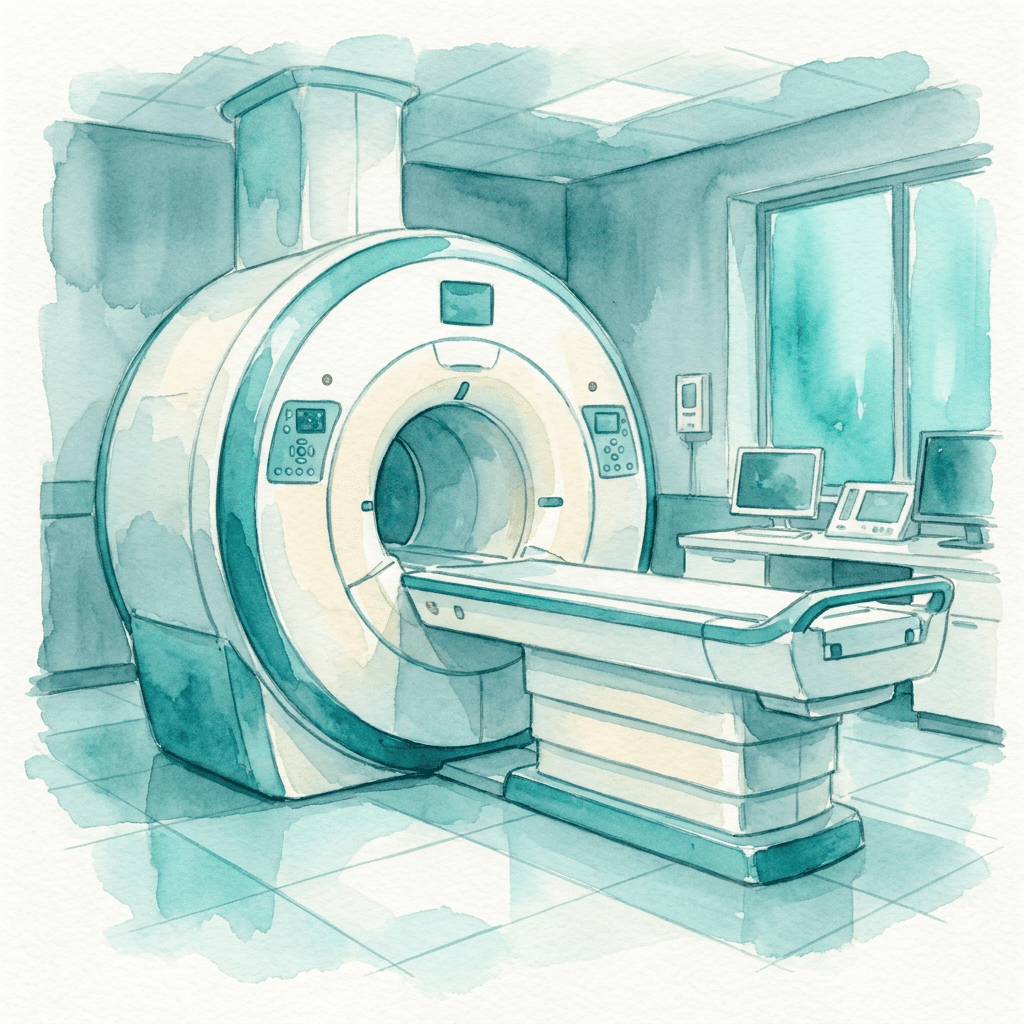
It didn’t show on my standard MRIs. It wasn’t until a Digital Motion X-ray that the slippage between C1 and C2 finally registered. Subsequent imaging confirmed the diagnosis of CCI.
It took years of medical appointments before someone ordered the scan that mattered.
What I Know Now
If the neck pain isn’t resolving no matter what you try, ask whether it could be structural. Especially when it sits at the base of the skull. When your head feels too heavy. When posture changes don’t touch it.
Standard imaging doesn’t always capture what’s happening when the body is upright and in motion. A normal MRI isn’t the same as nothing being wrong. The test couldn’t see what was wrong.
When the same symptoms keep returning, ask whether anyone is looking at the right problem.
Nine months out from surgery, there are still days.
Not long ago I spent one on the couch, eyes closed, a throbbing pain spreading from the right side of my jaw up through my ear and down into my neck. My daughter, seventeen now, came in and asked me to make her lunch.
From the couch, eyes still closed, I told her I wasn’t feeling well. That she’d have to make her own today.
She went to the kitchen and made chicken fingers and mac and cheese. Didn’t say anything about it. Neither did I.
She’s grown up knowing some days I can’t.
That was nine months after surgery.
I can’t tell you what’s causing your pain. If you’ve been explaining it away for as long as I did, you’re not imagining it. If posture changes and stretches haven't touched it, keep asking.
Want to understand the structural cause?
Craniocervical Instability (CCI): A Patient’s Perspective.
Every stripe tells part of the story.
The full story begins in You Might Be a Zebra: Rare Unveiled.
Please note: This information is provided for general reference only and is not based on medical advice, diagnosis, or treatment. Always consult a qualified healthcare professional for medical concerns.